
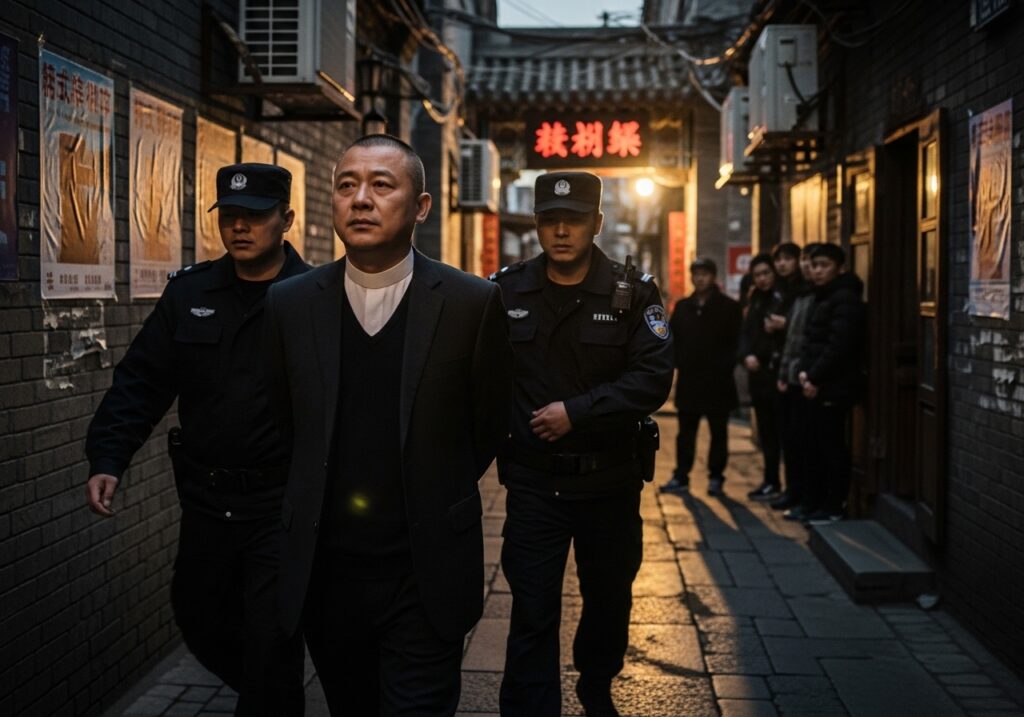
The Chinese Communist Party (CCP) has once again shown its deep hostility toward freedom of religion. On Friday, Chinese authorities arrested Pastor Jin Mingri, also known as Ezra Jin, along with dozens of other Christian leaders across at least five provinces. These men and women were part of the Zion Church, one of the largest unregistered house churches in China. Their only crime appears to be preaching the Word of God without the permission of the Communist Party.
The Trump administration responded swiftly. Secretary of State Marco Rubio condemned the arrests and demanded the immediate release of Pastor Jin and the others. In a public statement, Rubio said the crackdown shows the CCP’s fear of people who worship freely, outside of Party control. He called on Beijing to stop persecuting house churches and to allow all people of faith to worship without fear.
This is not just a local religious issue—it’s a global warning sign. When a government like China’s decides it can dictate how and where people worship, it’s a threat to freedom everywhere. And when America speaks out, it’s not interfering—it’s standing up for human rights, the very foundation of our own country.
China’s foreign ministry responded with the usual denial, claiming it protects religious freedom and that the arrests are simply a matter of law. But the facts tell a different story. Pastor Jin has been under surveillance for years. He’s been blocked from leaving the country. His church, which draws about 1,000 worshippers each week, has long refused to register with the government-run church system, where sermons are controlled and rewritten by the CCP.
The charges now looming over these pastors—“illegal dissemination of religious content via the internet”—are vague and dangerous. They show how the Chinese regime is using new laws and digital surveillance to keep a tighter grip on religion. Under President Xi Jinping, Beijing has pushed hard to bring all faiths under state control. That means rewriting the Bible, tearing down crosses, and arresting pastors who won’t fall in line.
This matters to the United States for several reasons. First, freedom of religion is a core American value. If we stay silent while the world’s most powerful dictatorship crushes religious freedom, we send the message that liberty is negotiable. Second, the CCP’s growing control over its people should concern every American. China is not just a country—it’s a global power with ambitions to shape the 21st century in its image. If we let them, they will export their model of total control to other nations, including through technology, trade, and diplomacy.
This crackdown also raises questions about the resilience of the Chinese people. Despite years of persecution, house churches continue to grow. As Corey Jackson of the Luke Alliance pointed out, Chinese Christians may be stronger than the regime realizes. That strength, rooted in faith and community, is exactly what the CCP fears. And that’s why they are trying to stamp it out.
For the United States, the path forward is clear. We must continue to speak out against religious persecution in China. We must support groups that defend religious freedom around the world. And we must stand firm against the growing threat of authoritarianism, whether it comes through economic pressure, digital surveillance, or brute force.
President Trump’s administration has made religious freedom a key part of U.S. foreign policy. That commitment is more important now than ever. The arrests in China are not just a Chinese problem—they’re a warning to the free world. If we don’t defend liberty abroad, we may find it harder to protect it at home. Let’s be clear-eyed, and let’s be ready. The fight for freedom does not stop at our borders.