
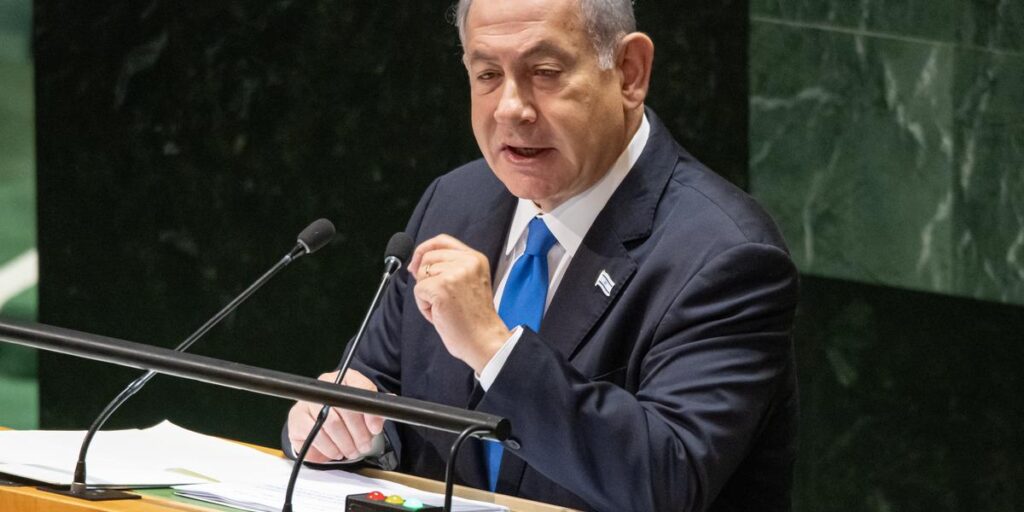
President Trump stood next to Benjamin Netanyahu at Mar-a-Lago Monday and made his position clear.
The Israeli prime minister deserves a pardon.
“He’s a wartime prime minister who’s a hero. How do you not give a pardon? I think it’s a very hard thing not to do.”
Then Trump went further: “I spoke to the president; he tells me it’s on its way.”
One problem: Israeli President Isaac Herzog’s office immediately denied it.
Herzog’s Office Contradicted Trump Within Hours
The New York Times reported that Herzog’s office “quickly denied that any decision had been made and said a decision was weeks away, at a minimum.”
When Reuters followed up, Herzog’s office said the Israeli president hadn’t even communicated with Trump since mid-November.
That’s a significant contradiction. Trump claimed a recent conversation. Herzog’s office says no such conversation occurred.
Either there’s a miscommunication or someone isn’t being accurate.
Trump Sent a Formal Letter Calling the Trial “Political Lawfare”
Trump’s advocacy for Netanyahu isn’t new.
In mid-November, he sent a formal letter to Herzog requesting a pardon. The language was blunt:
“Isaac, we have established a great relationship, one that I am very thankful for and honored by, and we agreed as soon as I was inaugurated in January that the focus had to be centered on finally bringing the hostages home and getting the peace agreement done.”
“Now that we have achieved these unprecedented successes, and are keeping Hamas in check, it is time to let Bibi unite Israel by pardoning him, and ending that lawfare once and for all.”
Trump called the prosecution “political” and “unjustified.”
Netanyahu Is the First Israeli Prime Minister to Stand Trial While in Office
The charges are serious.
Netanyahu faces fraud, breach of trust, and accepting bribes in three different cases stemming from a 2019 indictment.
He’s denied all accusations.
But the trial has continued throughout his wartime leadership — a distraction Netanyahu argues has “impaired his ability to govern.”
Israeli Pardon Procedures Don’t Work Like American Ones
Herzog’s office pointedly noted that pardon requests must follow “established procedures.”
In Israel, pardons are typically submitted by the individual or an immediate family member — usually after legal proceedings conclude.
Netanyahu’s case is ongoing. The trial isn’t finished.
Granting a pardon before conviction would be extraordinary. Granting one during trial would be unprecedented.
Trump Framed It as a Wartime Necessity
The American president’s argument is pragmatic:
Israel is at war. Netanyahu is leading that war. The trial is a distraction.
“How do you not give a pardon?”
For Trump, the question answers itself. A wartime leader shouldn’t be fighting legal battles while fighting actual battles.
Herzog Faces a Political Minefield
The Israeli president is in a difficult position.
Granting a pardon would infuriate Netanyahu’s domestic opponents, who see the trial as legitimate accountability.
Refusing would displease Trump, whose support Israel desperately needs.
Herzog’s office praised Trump’s “unwavering support for Israel” while emphasizing proper procedures — diplomatic language for “we’re not rushing this.”
The Contradiction Over Recent Communication Remains Unexplained
Trump said he spoke to Herzog and was told a pardon is “on its way.”
Herzog’s office says no communication has occurred since November.
Both statements can’t be true.
Either Trump spoke to someone who conveyed a misleading message, or there’s a diplomatic disconnect between what was said and what Herzog’s office is acknowledging publicly.
Netanyahu’s Request Cited Governance Concerns
In his own November 30 pardon request, Netanyahu argued that frequent court hearings have impaired his ability to govern during a tumultuous period.
The argument has merit on its face — leading a war while attending corruption hearings is objectively challenging.
But critics counter that no one is above the law, wartime or not.
“Ending That Lawfare Once and For All”
Trump’s framing matters.
He didn’t call for Netanyahu to be found innocent. He called the prosecution itself illegitimate — “lawfare” rather than legitimate legal process.
That’s the same term Trump uses for his own prosecutions. He sees both cases as political persecution dressed up as criminal justice.
Israel’s Legal System Versus American Pressure
The situation tests Israeli judicial independence.
If Herzog pardons Netanyahu because the American president demanded it, what does that say about Israeli sovereignty?
If he refuses despite American pressure, what does that mean for U.S.-Israel relations at a critical moment?
Herzog has to balance Trump’s clear wishes against domestic political realities and legal norms.
“How Do You Not Give a Pardon?”
Trump’s rhetorical question assumes the answer is obvious.
But in Israel, it’s not obvious at all.
Netanyahu has passionate supporters who believe the prosecution is persecution. He has equally passionate opponents who believe he’s corrupt and should face justice.
A pardon would resolve nothing politically — it would simply shift the battlefield.
The Decision Remains Weeks Away
Herzog’s office said any decision is “weeks away, at a minimum.”
That timeline suggests they’re not rushing to accommodate Trump’s public pressure.
The pardon may eventually come. Or it may not. But it won’t happen on Trump’s preferred schedule.
“I spoke to the president; he tells me it’s on its way.”
Herzog’s office disagrees. And in Israeli politics, that disagreement matters more than American wishes.