
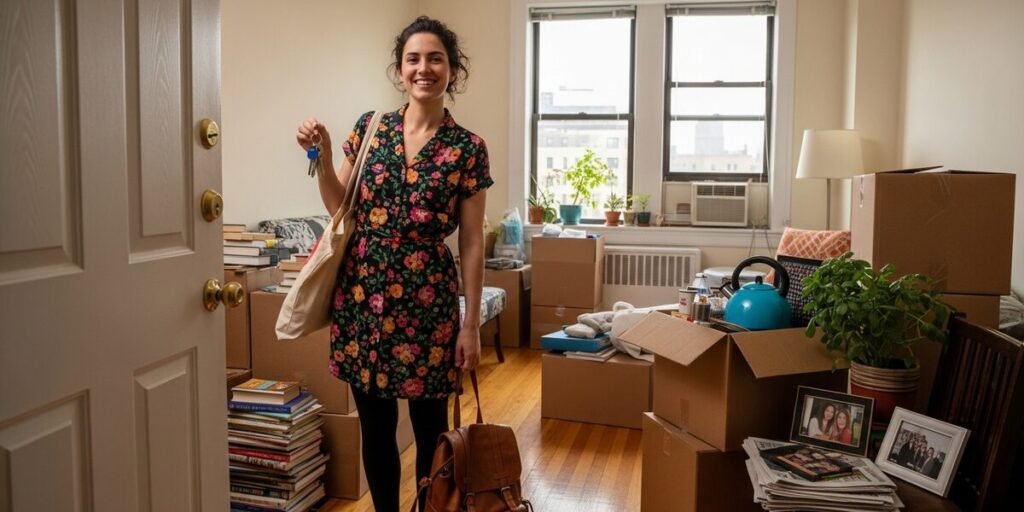
Sandra Gomez opened her lease renewal letter in East LA and braced for the worst.
She pays $2,000 a month. Her apartment isn’t covered by rent stabilization. The landlord could charge whatever he wanted.
The new price: $1,950.
“I thought it was a mistake,” she said. “Since when does rent get cheaper in L.A.?”
Since Donald Trump closed the border.
A Renter’s Market Nobody Predicted
The national median rent in January hit $1,353 — down 1.4% from a year ago. The lowest January rent since 2022. Overall rents are 6.2% below their 2022 peak.
Sellers now outnumber buyers by more than 500,000 nationwide.
Apartment vacancies are climbing. Landlords are cutting prices. Renters are getting renewal offers below their current rate.
In Los Angeles. In Miami. In markets across the country that spent years squeezing every dollar out of desperate tenants.
The headlines are finally admitting it. The LA Times ran: “Finally, a renter’s market.”
What none of them want to say is why.
14 Million Renters That Nobody Talked About
Joe Biden welcomed roughly 14 million migrants during his presidency.
They all needed somewhere to live.
Fourteen million people entering the rental market — competing for apartments, driving up demand, pushing prices to levels that crushed young Americans trying to start their lives.
For years, the establishment media blamed rent spikes on everything except the obvious cause. Inflation. COVID. Construction delays. Government failure to build housing. Greedy landlords.
Never immigration. Never the 14 million new people who needed apartments in a market that was already short on supply.
Because acknowledging the connection between mass immigration and housing costs would mean acknowledging that Trump was right.
A Miami Landlord Tells the Truth
Ariel Lopez owns 300 apartments in Miami-Dade County.
His typical vacancy rate: 2%.
His current vacancy rate: 30%.
“Not only did a lot of my tenants disappear, but slow paying became more of a norm, because people are living month to month trying to figure out if they’re going to be here or not,” Lopez told a real estate study.
Thirty percent vacancy. In Miami. Where a year ago you couldn’t find an apartment without a bidding war.
Lopez doesn’t blame the economy. He doesn’t blame interest rates. He places the blame “squarely on the federal government’s immigration policies.”
When tenants are illegal immigrants who fear deportation, they either leave or stop paying. Either way, the landlord has empty units. And empty units mean lower prices for everyone else.
Florida and Texas Feel It First
The states with the largest immigrant populations are seeing the biggest impact.
In Florida, where 22% of the population is foreign-born, 67% of landlords reported a negative impact from immigration enforcement.
In Texas, 21% of owners and developers reported a significant negative impact, with another 26% feeling somewhat negative effects.
“Negative impact” — for landlords.
For renters? It’s the best news in years.
Every vacant apartment that used to house an illegal immigrant is an apartment available to an American at a lower price. Every landlord competing for fewer tenants is a landlord cutting rates.
The market is doing what markets do when demand drops. Prices fall. Options expand. Renters gain leverage they haven’t had since before Biden opened the floodgates.
Young Americans Can Finally Breathe
Roughly 50% of all renters are under 40.
These are the Americans who’ve been crushed by Biden-era housing costs. College graduates living with parents. Young couples unable to afford their own place. Workers spending half their income on rent with nothing left to save.
Falling rents change everything for them.
A few hundred dollars less per month means savings for a house down payment. It means moving out of a parent’s basement. It means starting a family in your own space instead of postponing life because the rent is too high.
Sandra Gomez in East LA said it simply: “If prices drop even a little, it goes a long way toward my quality of life.”
She’s 29. She’s watched friends leave LA because they couldn’t afford rent. For the first time in years, staying is becoming possible.
The Construction Pipeline Makes It Even Better
Biden’s open-border policy prompted landlords and developers to build aggressively. Millions of new renters meant millions of new apartments needed.
Those construction projects take years to complete. Many are finishing now — flooding the market with new supply.
But the demand those apartments were built for? It’s evaporating. Trump’s border enforcement has dramatically reduced new arrivals. The millions of anticipated renters aren’t coming.
New supply plus reduced demand equals a renter’s paradise.
Apartments built for illegal immigrants will be rented by Americans at prices those Americans can actually afford.
The irony is beautiful: Biden’s immigration policy created the construction boom, and Trump’s immigration policy ensures Americans — not illegal immigrants — benefit from it.
The Media’s Selective Blindness
For years, reporters refused to connect immigration and housing costs.
They wrote thousands of articles about the “housing affordability crisis” without mentioning that importing 14 million people into an already tight market might affect prices.
They blamed landlords. They blamed zoning laws. They blamed construction costs. They blamed interest rates.
They blamed everything except the policy they supported.
Now that rents are falling, they’re being “forced to recognize the obvious,” as the article notes. The connection between border enforcement and housing costs is becoming impossible to ignore.
But watch the coverage. They’ll credit “increased supply.” They’ll credit “market correction.” They’ll credit everything except Trump’s border policy.
Because admitting Trump was right about immigration and housing means admitting they were wrong for years. And media outlets would rather mislead their audiences than acknowledge that basic economic reality.
The Political Dilemma Trump Is Navigating
There’s a tension in Trump’s housing approach that deserves honest discussion.
Lower rents help young Americans. That’s unambiguously good.
But lower housing demand also pushes down home prices. And 65% of Americans own homes. Their largest asset is their house. They vote at higher rates than renters.
Trump acknowledged this last week: “I don’t want to drive housing prices down. I want to drive housing prices up for people that own their homes.”
His solution: lower interest rates to maintain home values while improving affordability through reduced monthly payments.
Whether that threading of the needle works remains to be seen. But the fundamental reality is clear: reduced immigration is already lowering rents. That’s happening now. And for young Americans, it’s transformative.
The Study Director Said It Plainly
Eric Finnigan, the director of the real estate study, summarized the situation in one sentence.
“Immigration is going to be very low for the foreseeable future. That removes a big segment of rental demand.”
No hedging. No spin. No blaming construction delays or interest rates.
Reduced immigration equals reduced rental demand equals lower rents.
Basic economics. Supply and demand. The principle that media and politicians pretended didn’t apply to immigration for years.
It always applied. They just didn’t want you to notice.
Sandra Gomez Noticed
She’s 29. She lives in East LA. She’s watched friends leave because they couldn’t afford to stay.
Her rent went down for the first time in her adult memory.
She thought it was a mistake.
It wasn’t a mistake. It was a border policy finally working for the Americans who’ve been paying the price for years.
Sandra Gomez may never connect her cheaper rent to Trump’s immigration enforcement. The media will make sure of that.
But the connection is real. The savings are real. And for the first time in years, young Americans like Sandra are catching a break they desperately needed — because someone finally stopped importing millions of people to compete with them for apartments they could barely afford.