
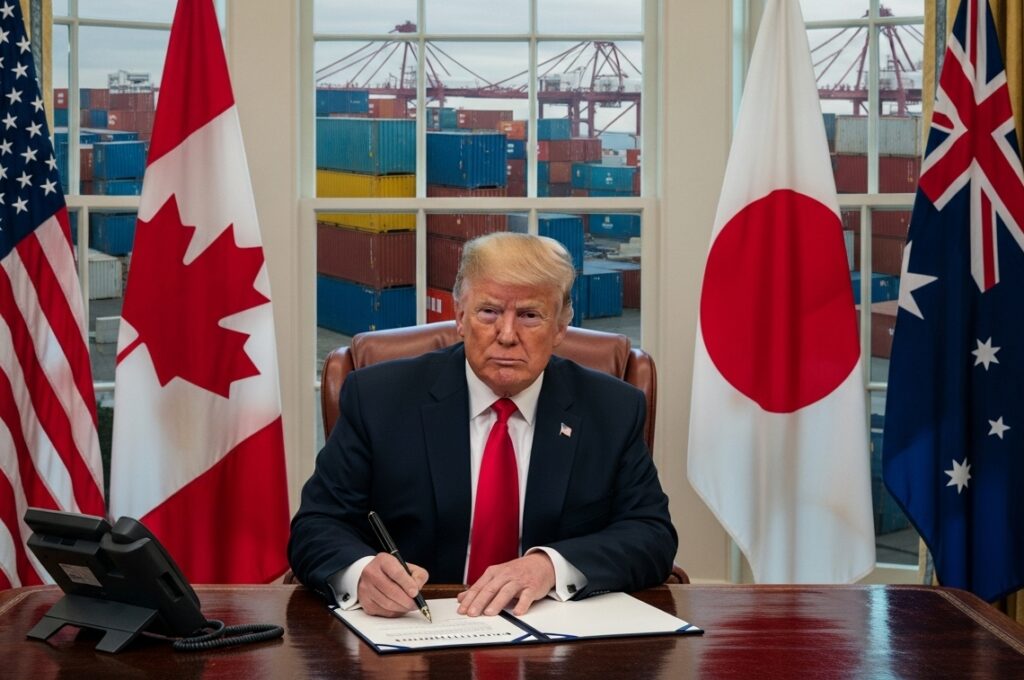
President Trump has signed a new executive order that will give some countries an exemption from U.S. tariffs if they already have a trade deal with us. This move is focused on key goods like nickel, gold, other metals, pharmaceutical compounds, and chemicals. The goal is to strengthen trade partnerships that help the U.S. economy and protect American workers.
Tariffs are taxes on imported goods. They are one way the U.S. can respond when other countries are not trading fairly. In recent years, countries like China have taken advantage of the global system, using unfair practices like currency manipulation, forced technology transfers, and state-backed industries that put American companies at a disadvantage. President Trump has used tariffs as a tool to push back and bring jobs back home.
But now, with this new order, the administration is signaling flexibility. If a country has a fair trade deal with the United States—one that includes strong protections for American industries and workers—it may receive an exemption. That means their metal and chemical exports can enter the U.S. market with lower or no tariffs.
This is not about giving in. It’s about rewarding countries that play by the rules. For example, allies like Canada, Australia, and Japan have long-standing trade agreements with the U.S. and are likely to benefit from this exemption. These nations provide vital materials for American manufacturing, including defense production.
Nickel, for instance, is used to make batteries, stainless steel, and military hardware. Gold and rare metals are essential for electronics and aerospace. Pharmaceutical compounds are critical for our nation’s health supply chain. By easing tariffs on these goods from trusted partners, the U.S. can strengthen its industrial base, reduce dependency on rival nations like China, and keep supply chains secure.
This move also gives other countries a reason to come to the table. Nations that have been reluctant to sign trade deals with the U.S. may now see the benefits. If they want access to the American market without steep tariffs, they must agree to fair terms, including protections for intellectual property, labor standards, and national security concerns.
From a geopolitical perspective, this order is part of a larger strategy to reshape global trade in America’s favor. It puts pressure on countries that have leaned heavily on U.S. markets while giving little in return. It also strengthens our alliances with countries that share our values and economic principles.
Moreover, this policy helps the U.S. prepare for a more dangerous world. As tensions rise with China and Russia, the need for reliable trade partners becomes more urgent. By making deals with friendly countries and cutting special breaks for them, the U.S. can build a stronger, more secure supply chain for critical goods.
It also sends a message: America is open for business, but only on fair and transparent terms.
This executive order continues the Trump administration’s America First approach. It puts national interest at the center of economic policy. Instead of relying on global institutions that have often failed to protect American workers, the U.S. is now using its leverage to get better results.
In the long run, this could help rebuild American manufacturing, encourage more investment at home, and reduce our reliance on hostile powers. It’s a smart mix of toughness and cooperation.
The world is watching how the U.S. handles trade. With this step, President Trump is showing that the United States is serious about fair trade—but also willing to reward those who stand with us. That’s good for our economy, our security, and our future.