
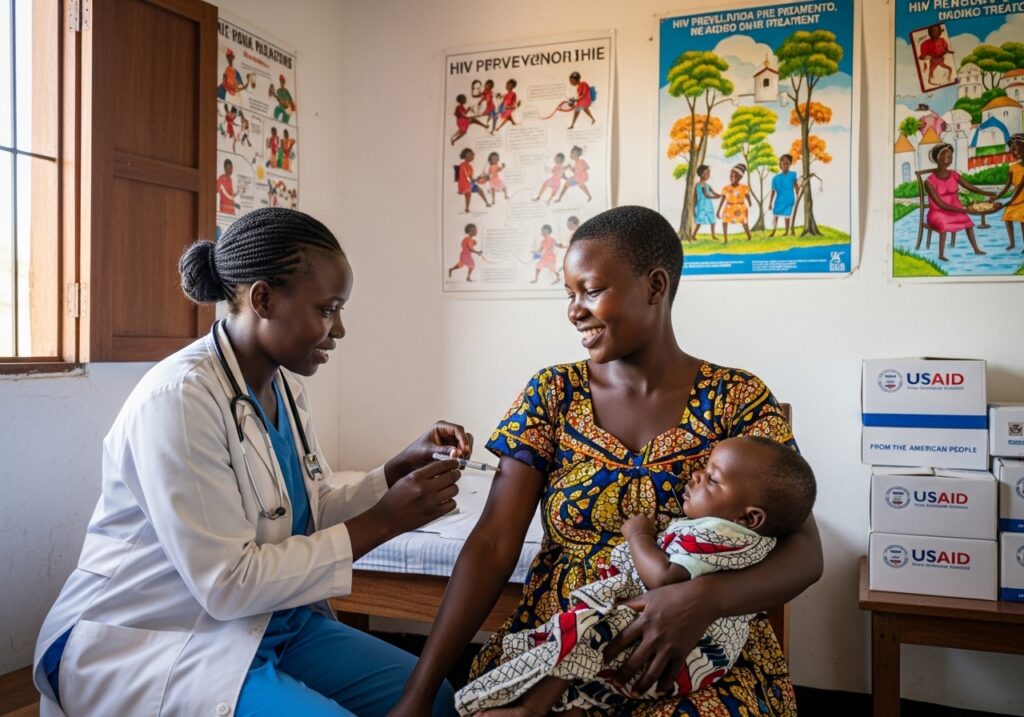
The global fight against AIDS has reached a critical turning point, and the renewed leadership of the United States under President Trump is playing a key role in pushing the effort across the finish line. For over two decades, the United States has led the world through the President’s Emergency Plan for AIDS Relief, known as PEPFAR. Started in 2003, this program has already saved more than 26 million lives, mostly in Africa, where HIV and AIDS have hit the hardest.
But PEPFAR has done more than just save lives. It has built goodwill for America around the world. It has strengthened weak governments, helped prevent failed states, and protected American security interests. When people are healthy and stable, they are less likely to turn to extremism or flee their countries, which can lead to border crises and global instability.
In President Trump’s first term, his administration worked closely with Congress to reauthorize PEPFAR, ensuring it continued its life-saving work. The program was made more efficient by focusing on local solutions, which stretched every U.S. tax dollar further. This model of smart, focused aid is a key part of the America First approach to foreign policy — helping others while putting American interests at the center of decision-making.
Now, in 2025, the Trump administration is once again putting American leadership to work in the fight against HIV/AIDS. A new drug, developed in partnership with the U.S. company Gilead Sciences, is changing the game. This medicine, given just twice a year, both treats HIV and helps stop it from spreading. It offers real hope that AIDS could be ended by the year 2030.
President Trump has set a clear goal: end mother-to-child transmission of HIV/AIDS in the next three years. This goal is not just symbolic — it’s a step toward wiping out the disease for good. And with strong leadership at the State Department, including Secretary Rubio and health envoy Jeremy Lewin, the U.S. is backing up its words with action. Just last week, the U.S. pledged $4.6 billion to the Global Fund to Fight AIDS, Tuberculosis, and Malaria. This money will be matched two-to-one by other countries, multiplying its impact.
The Trump administration has also rolled out a new American First global health strategy. This plan keeps America in the lead on global health, but insists on accountability and results. If U.S. dollars are being spent overseas, they must be used wisely, with real outcomes for people in need — and real benefits for American interests.
But one key piece of the puzzle still needs attention. UNAIDS, the United Nations program that coordinates global HIV/AIDS efforts and tracks progress, is short $50 million. That’s a small sum compared to the billions already being invested, but it’s critical to keeping the entire system running effectively. Without strong data and oversight, the rest of the work risks falling short. Congress should act quickly to fill this gap.
This isn’t just about charity. It’s about national security. AIDS has long threatened to destabilize entire regions. Preventing its spread means fewer humanitarian crises, fewer refugee flows, and fewer health threats that could cross our borders. American leadership here saves lives abroad and protects our way of life at home.
President Trump was the first president to call for the end of AIDS both in America and around the world. He has shown that when the United States leads with strength and purpose, the world listens. With major global events like the World Cup and the Olympics coming to U.S. soil, America has a chance to showcase its leadership and share this message of hope and health with the world.
If these efforts succeed, millions more lives will be saved. And the legacy of American leadership — and President Trump’s role in it — will be sealed in history. Ending a global epidemic would be a triumph not just of medicine, but of moral leadership and strategic focus. The time to finish the fight is now.