
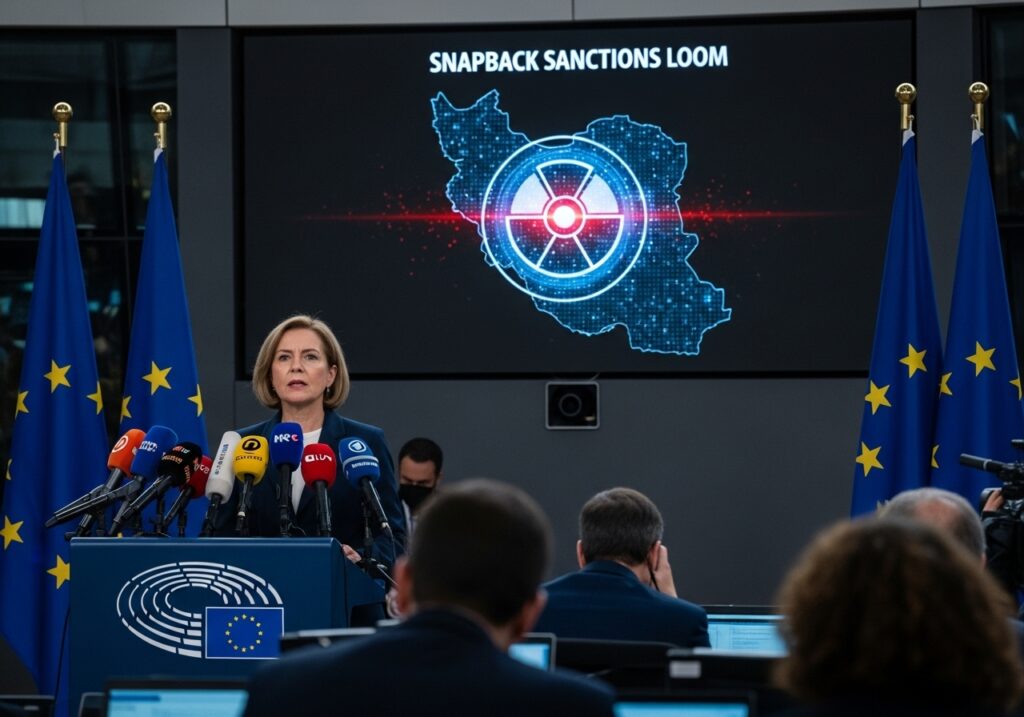
The European Union has warned Iran that it must stop expanding its nuclear program or face a return of international sanctions. These are called “snapback” sanctions because they can be quickly reimposed through the United Nations if Iran breaks the terms of old agreements. This warning comes from the EU’s top foreign policy official, Kaja Kallas. Her message was clear: Iran needs to take action soon, or it will face serious consequences.
This isn’t the first time Iran has been in trouble over its nuclear program. Back in 2015, Iran signed a deal with the U.S., the EU, and other world powers. That deal was meant to stop Iran from building nuclear weapons. In exchange, many sanctions were lifted. But Iran didn’t keep its promises. It secretly kept working on its nuclear program. In 2018, President Trump pulled the United States out of that deal because it was too weak and didn’t stop Iran’s bad behavior. Since then, Iran has pushed ahead with more uranium enrichment, which is a key step toward making nuclear bombs.
Now, with Iran closer than ever to having the materials needed for a nuclear weapon, the EU is finally starting to admit there’s a problem. Under the terms of the original deal, if Iran breaks the rules, the U.N. can quickly bring back sanctions that were lifted. This is what “snapback” means. It’s a way to punish Iran without needing to get new votes at the U.N., where countries like Russia and China might block action.
From a U.S. point of view, this is a serious national security issue. A nuclear-armed Iran would be a threat to our allies in the Middle East, especially Israel. It would also risk setting off a nuclear arms race in the region. If Iran gets a bomb, other countries like Saudi Arabia or Turkey might try to get one too. That would make a dangerous part of the world even more unstable.
Iran has shown time and again that it cannot be trusted. Its leaders say they want nuclear power for peaceful purposes, but they keep hiding parts of their program and refusing to let inspectors in. Meanwhile, they support terrorist groups like Hezbollah and the Houthis, and they’ve been involved in attacks on U.S. forces and allies. Giving Iran relief from sanctions without real proof they’ve stopped their nuclear program is a mistake we cannot afford to repeat.
President Trump’s policy has been to put “maximum pressure” on Iran. That means using strong sanctions to cut off Iran’s money and force them to come back to the table on American terms. The goal is to stop Iran’s nuclear program, not just slow it down. The EU’s latest warning shows that even Europe is starting to realize the old ways of dealing with Iran don’t work.
The next few months will be important. If the EU moves forward with snapback sanctions, it could isolate Iran even more. But if they back down, Iran will see it as a green light to keep going. The U.S. should support any serious effort to hold Iran accountable, but we must also be ready to act on our own if needed. Our national security depends on keeping nuclear weapons out of the hands of radical regimes.
In the long run, the United States must continue to lead. We cannot rely on the U.N. or the EU to protect our security. We need strong leadership, clear goals, and the will to act. Iran only respects strength. If we show weakness, we will pay the price—not just overseas, but here at home. A nuclear Iran would change the world, and not for the better. Now is the time to stand firm.