
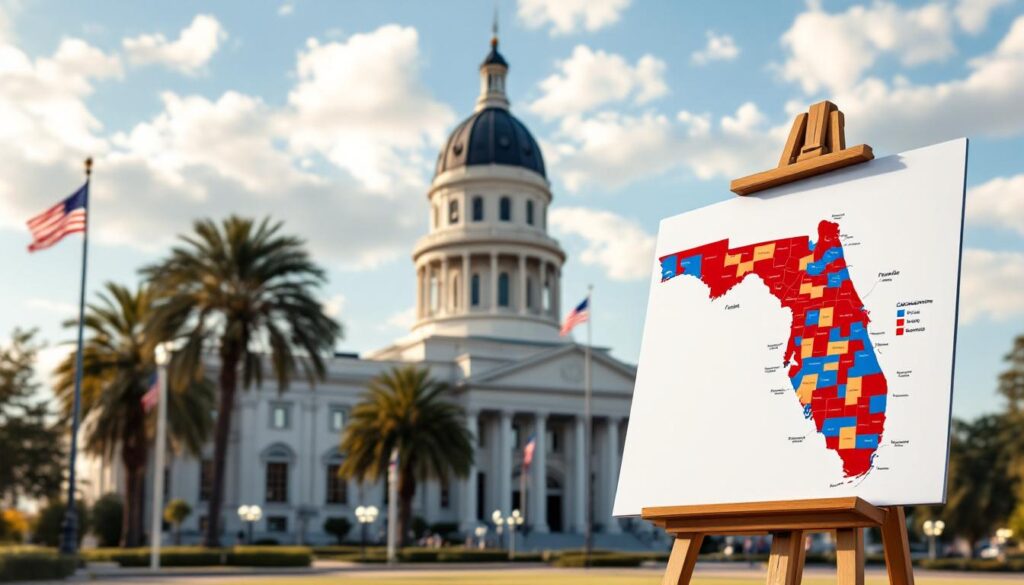
We’ve been telling you for years that Florida is where common sense goes to thrive and where progressive fantasies go to die. Well, the Sunshine State just proved it again. On Tuesday, the Florida House panel approved a brand-new congressional district map that could hand Republicans a net gain of four seats heading into the 2026 midterms. Four seats. In one state. Without a single campaign ad, a single debate, or a single ballot being cast. That’s not gerrymandering — that’s geography catching up with reality.
Meanwhile, Democrats are holding emergency Zoom calls about whether their party mascot should be a non-binary donkey. Really inspiring stuff over there. While the left was busy workshopping pronouns for their fundraising emails, Florida legislators were literally redrawing the political landscape of America’s third-largest state. You’d think someone in the DNC war room would’ve noticed, but they were probably too busy trying to figure out how to make socialism sound fun to suburban moms.
Here’s what happened. The Florida House Redistricting Committee looked at the current congressional map, looked at the population shifts that have been hammering the state since COVID sent half of New York and California packing for Tampa and Fort Myers, and drew lines that reflect where people actually live now. The result? A map that turns several competitive districts into solid Republican territory and could flip seats that Democrats have been clinging to like a life raft in a red ocean.
And before the usual suspects start screaming about fairness — this is how redistricting works. Every state does it. Every decade. The difference is that when Democrats do it in New York or Illinois, the media calls it “ensuring fair representation.” When Republicans do it in Florida, suddenly it’s an assault on democracy. Spare us. The same people who cheered when California drew districts shaped like abstract art are now clutching their pearls because Florida drew a map that makes geographic sense.
Let’s talk about what four seats actually means. The House majority right now is razor-thin. Four seats is the difference between passing legislation and begging moderates for scraps. Four seats is the difference between a functioning conservative agenda and two more years of gridlock. And Florida just put those four seats on a silver platter before the campaign even starts. That’s not a head start — that’s showing up to the race and finding out the other team forgot their shoes.
Governor DeSantis has spent the last several years turning Florida into the model for what a red state looks like when it actually governs like one. Low taxes. School choice. No COVID tyranny. Parents’ rights. And the population numbers tell the story — people are voting with their moving trucks. Every U-Haul that crosses the Florida state line is a referendum on progressive governance, and the results are unanimous. Florida is growing because it works, and now that growth is translating directly into political power.
The Democrats’ problem isn’t the map. Their problem is the territory. Florida used to be a swing state. Remember hanging chads? Remember 2008? Those days are over. The state has shifted so far right that even the districts Democrats thought were safe are now competitive, and the competitive ones are now solid red. You don’t fix that with a lawsuit. You don’t fix that with a sternly worded op-ed in the Miami Herald. You fix that by offering voters something they actually want — and the Democratic Party hasn’t done that in Florida since Obama was buying votes with cash-for-clunkers.
Now, will the Democrats challenge this map in court? Of course they will. That’s what they do when they can’t win elections — they sue. They’ll drag this to some sympathetic judge and argue that the map doesn’t adequately represent communities of interest, or some other legal buzzword that means “we don’t like losing.” But Florida’s courts have already upheld similar maps, and the state legislature has the legal authority to draw these lines. Good luck arguing that a state that gained nearly a million residents in four years shouldn’t adjust its districts.
The bigger picture here is something the media will never tell you: the red wave isn’t coming. It’s already here. It’s not a single election night tsunami — it’s a slow, steady tide of people leaving blue states, moving to red ones, and reshaping the electoral map in the process. Florida is just the most visible example. Texas, Tennessee, Idaho, the Carolinas — they’re all seeing the same thing. Americans are sorting themselves, and they’re sorting themselves into states that respect their freedom, their wallets, and their kids.
Four seats. One state. Zero votes cast. That’s called winning before the game starts. And if the Democrats want to know why it’s happening, they should spend less time on their DEI task forces and more time asking why millions of Americans would rather move a thousand miles than live under their policies for one more year.
Florida isn’t just a state anymore. It’s a statement.