
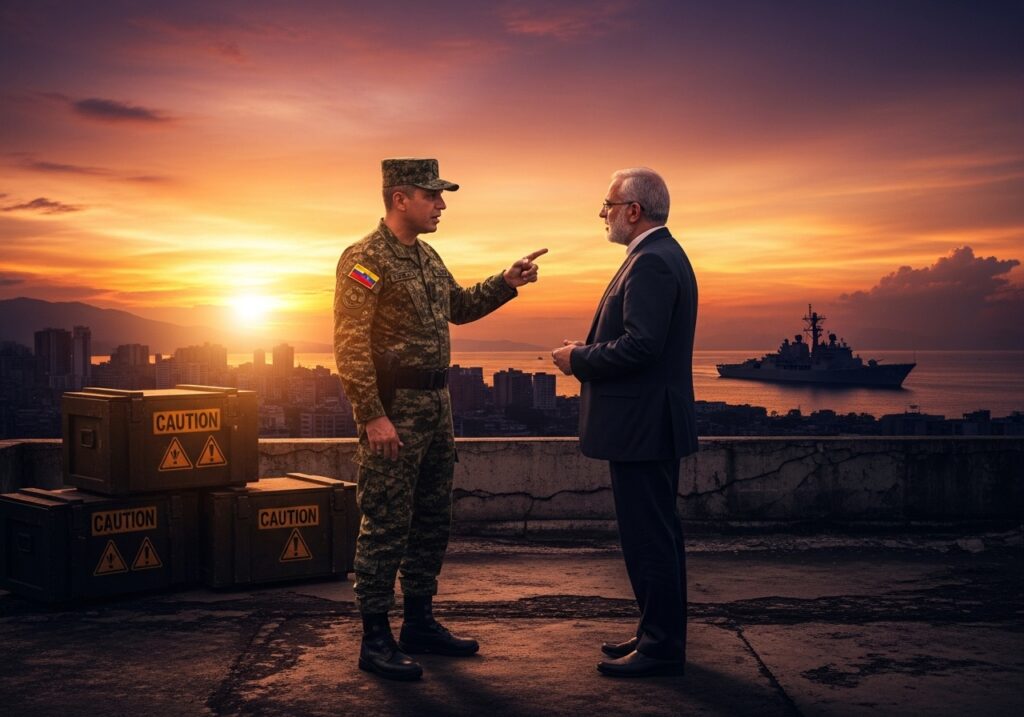
Iran is once again showing its hand in Latin America, this time by openly backing Venezuela’s dictator Nicolás Maduro. This isn’t just about politics or diplomacy. It’s about a dangerous partnership between two regimes that support terrorism, drug trafficking, and organized crime. And it’s happening just south of our border.
As President Trump increases military pressure in the Caribbean and cracks down on criminal networks in the region, Iran is stepping in to support Maduro’s failing regime. This is not a surprise. Iran has long used rogue states like Venezuela to expand its influence close to the United States. Now, with U.S. forces actively disrupting drug routes and targeting criminal operations linked to Caracas, the Iranian regime is doubling down.
This week, Iran’s Foreign Ministry warned of what it called “dangerous repercussions” if the U.S. continues its operations in the region. Venezuela quickly thanked Iran for its support. But let’s be clear: this isn’t about solidarity or peace. It’s about power and control.
Isaias Medina, a former Venezuelan diplomat who defected from the regime, put it plainly. He said Iran and Venezuela are working together in military, intelligence, and criminal operations. Their goal isn’t peace. It’s to build a network that threatens U.S. national security and undermines stability in the Western Hemisphere.
This partnership between Tehran and Caracas is troubling for several reasons. First, it gives Iran a physical foothold in Latin America. That means Iranian agents, weapons, and funds can move more freely through the region. It also gives Iran access to criminal networks that stretch from Venezuela through Central America and into the United States. These networks are already responsible for flooding our country with drugs and violence.
Second, it allows both regimes to practice what analysts call “asymmetric warfare.” That’s a fancy term for using irregular tactics like terrorism, cyber attacks, and propaganda instead of traditional armies. Iran has used these tactics for decades in the Middle East. Now it’s bringing them to our own backyard.
Third, this alliance could be a stepping stone for more direct threats. Iran has a history of working with proxy forces—groups like Hezbollah that carry out attacks on its behalf. In fact, Iran has supported Hezbollah cells in Latin America for years. With Venezuela’s help, those cells could expand operations or even plan attacks on U.S. interests in the region.
The Trump administration is not standing by. Since September, the U.S. has launched at least 21 deadly strikes on boats involved in drug trafficking routes tied to Venezuela. These missions aren’t just about stopping cocaine. They are part of a larger strategy to cut off funding to Maduro’s regime and its partners, including Iran.
President Trump has also made it clear that he’s not ruling out sending troops to the region if needed. At the same time, reports suggest that some backchannel talks with Caracas might be in the works. This is a smart move. While we must be ready to use force, we should also explore every option to break the grip of these criminal regimes.
Let’s not forget what’s at stake. Venezuela was once a prosperous country. Now it’s a failed state run by a dictator who jails his opponents and starves his people. Iran is a radical theocracy that chants “Death to America” and funds terror around the globe. Together, they form a threat not just to their neighbors, but to us.
The United States must continue to push back against this alliance. That means keeping up the military pressure, targeting criminal networks, and working with regional allies to isolate both regimes. Because the longer Iran and Venezuela are allowed to operate unchecked, the closer danger comes to the American people.