
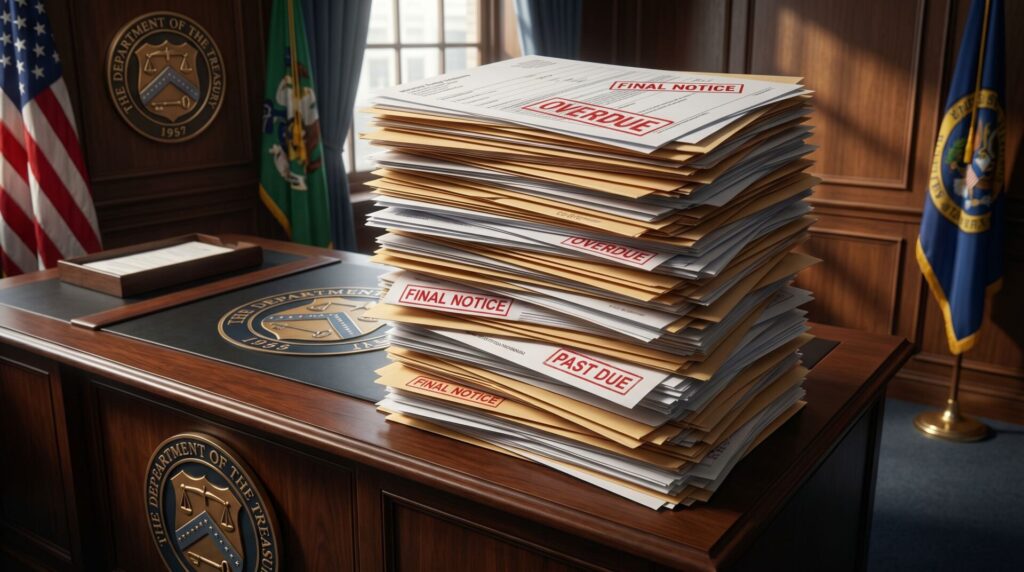
The SBA just referred 562,000 pandemic-era loans — totaling twenty-two billion dollars — to Treasury Secretary Scott Bessent for collections. That’s not a typo. That’s not a rounding error. That’s twenty-two billion dollars in fraudulent PPP and EIDL loans that are about to get clawed back from every fake LLC, phantom employee, and COVID grifter who thought the government would just forget.
Spoiler alert: the government didn’t forget. It just took a while to hire adults.
Let’s rewind for a second, because some of you might have blocked out the sheer insanity of the pandemic loan programs. When COVID hit, the government opened the money spigot and basically said, “Hey, if you have a business — or can pretend to have a business — here’s a pile of cash.” And America’s criminal class said, “Don’t mind if I do.” People were filing PPP loans for businesses that didn’t exist, for employees who were imaginary, for payrolls that were pure fiction. There were guys filing from prison. From *prison*. One dude in Florida got $4 million in PPP loans and immediately bought a Lamborghini. Another claimed to employ 50 people at a company that turned out to be a P.O. box next to a vape shop.
And the Biden administration? They looked at all of this and said, “Eh, let’s pause collections and focus on equity.”
Yeah. Equity. While billions of your tax dollars were being spent on Lamborghinis, mansions, and designer handbags, the people in charge of oversight were attending diversity seminars and writing memos about “equitable loan forgiveness.” The SBA under Biden didn’t just drop the ball — they threw it off a cliff and pretended they never had it.
But that was then. This is now.
Bessent’s Treasury Department isn’t writing memos. They’re writing collection notices. Five hundred sixty-two thousand of them. And the beauty of referring these loans to Treasury is that Treasury has tools the SBA doesn’t. We’re talking wage garnishment. Tax refund seizure. Offset programs that intercept federal payments. You thought you were getting your tax refund this year? Not if you owe Uncle Sam for that fake landscaping company you invented in 2020.
The numbers here are staggering and worth sitting with for a minute. The pandemic loan programs — PPP, EIDL, and the rest — distributed roughly $1.2 trillion. Government watchdogs have estimated that somewhere between $200 billion and $400 billion of that was fraudulently obtained. Let me put that in perspective: the entire annual budget of the Department of Education is about $80 billion. We lost *several Departments of Education* to pandemic fraud. And until now, almost nobody was collecting.
The SBA’s own Inspector General has been screaming about this for years. Report after report documenting billions in suspicious loans, hundreds of thousands of applications with duplicate Social Security numbers, addresses that didn’t exist, bank accounts opened the same week as the loan application. The fraud was so obvious that a reasonably intelligent golden retriever could have flagged most of it. But the bureaucracy ground on, slow and indifferent, because accountability is a four-letter word in Washington.
Now here’s where it gets fun. A whole lot of these fraudsters assumed the statute of limitations would save them. They figured if they just kept their heads down for a few years, the government would move on and they’d get to keep their ill-gotten gains. But loan collections don’t work like criminal prosecutions. Treasury can pursue these debts for a very, very long time. And with 562,000 loans now in the collection pipeline, a whole lot of people who thought they got away clean just realized they didn’t.
We should also talk about who these people are. The media loves to frame pandemic loan fraud as some kind of victimless administrative error. It wasn’t. These were real people making conscious decisions to steal from taxpayers. Some of them were organized crime rings running dozens of fake applications. Some were individuals who saw an opportunity and took it. And some — let’s be honest — were politically connected operators who knew the oversight was nonexistent and exploited it.
The honest small business owners — the ones who actually needed those loans to keep their doors open and their employees paid — they filled out the paperwork correctly, used the money for payroll, and moved on. They’re not the ones getting collection notices. The people getting collection notices are the ones who turned a national emergency into a personal ATM.
Twenty-two billion dollars. That’s what’s on the table right now, and it’s probably just the beginning. As Treasury works through these cases, expect more referrals, more collections, and — if there’s any justice left in the system — more prosecutions.
Scott Bessent didn’t come to Treasury to shuffle papers. He came to collect receipts. And 562,000 pandemic grifters just found out the hard way that the bill always comes due.
You just have to elect someone willing to send it.