
For forty years, the Islamic Republic of Iran has been running the same tired shakedown. Every time the mullahs needed oil prices to spike, or wanted to squeeze a concession out of Washington, or just felt like flexing for the cameras, they’d wave a rusty speedboat around the Strait of Hormuz and watch half the planet lose its mind. Twenty percent of the world’s oil moves through that little 21-mile chokepoint. And for four decades, we pretended the bearded gentlemen in Tehran owned it.
That ended yesterday. On a phone call. With Beijing. While most of Washington was still figuring out how to pronounce ‘strait.’
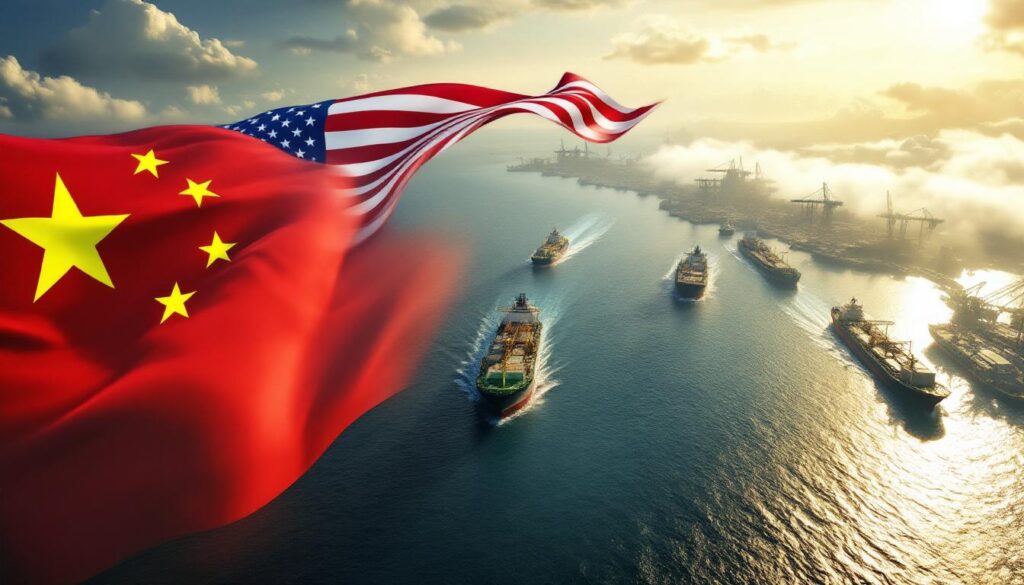
President Trump announced on April 15 that the United States has permanently opened the Strait of Hormuz after striking a direct agreement with China — the single biggest customer for Iranian oil on the planet. Translation: we just went over the mullahs’ heads, cut a deal with the guy holding their wallet, and turned Iran’s last piece of leverage into a traffic cone we can kick down the road whenever we feel like it. Forty years of chokepoint diplomacy, deleted in an afternoon.
Let that sink in. Obama sent pallets of unmarked cash on a cargo plane at 2 a.m. Biden quietly unfroze $6 billion and pretended nobody would notice. Kerry flew to Geneva and came back with a napkin drawing he called a ‘deal.’ Every Democrat administration in memory has treated Iran like a temperamental ex you have to keep buying flowers for. Trump just walked into the room, cut their phone line, and called their landlord.
And the landlord — Beijing — picked up.
Here’s what actually happened, stripped of the State Department jargon that makes everything sound like a dental procedure. China buys somewhere between 80 and 90 percent of Iran’s exported crude. Without Chinese buyers, Iran is a country with a lot of sand, a lot of centrifuges, and exactly zero customers. The mullahs’ entire economic survival — the thing that keeps their regime fed, their army paid, and their proxies armed — runs through Chinese refineries.
Trump figured out what nobody in the career diplomatic corps would admit out loud. You don’t need to negotiate with Iran at all. You negotiate with the guy buying their only product. You make him a better offer. And suddenly Tehran is sitting in a parking lot holding a ‘For Sale’ sign while the world’s second-biggest economy drives past without waving.
American energy dominance is doing what forty years of diplomacy couldn’t. We’re now the world’s largest oil and gas producer. We have LNG export terminals running at capacity. We have the shipping, the pipelines, the refineries, the technology, and the one thing the mullahs will never have — actual customers who trust us to deliver. Trump walked into that conversation with China holding every card, and the Chinese, being the ruthlessly practical negotiators they are, did the math in about eleven seconds. Why buy from a failing theocracy run by octogenarians when the Americans are offering the same product at a better price without the regional instability tax?
Deal done. Strait permanently open. Iran’s leverage: vaporized.
The best part? The media doesn’t know how to cover this. They spent four years telling you Trump was going to start World War III with Iran. They ran headlines about ‘reckless escalation’ every time he sent a carrier group anywhere near the Persian Gulf. They brought on retired generals to warn about ‘cycles of violence.’ And now — without a single shot fired — he just neutralized Iranian strategic power more completely than any military action in the history of the Islamic Republic. He didn’t bomb them. He made them irrelevant.
You can watch the cable news anchors try to process this in real time. ‘Is it good that Iran can no longer blackmail the global economy? Experts are divided.’ No, they’re not. Nobody is divided on this. Normal Americans understand instinctively that a world where Tehran doesn’t get to threaten shipping lanes is a world with cheaper gas, stronger allies, and fewer dead sailors. The only people ‘divided’ are the professional Iran-whisperers in Washington who spent their careers getting paid to manage a crisis that just got solved without them.
Meanwhile, in Tehran, the Supreme Leader is reportedly holding emergency meetings. We’d say we wish we were a fly on the wall, but honestly, you can imagine the conversation. ‘Supreme Leader, the Chinese say they’re buying from the Americans now.’ ‘The infidels?’ ‘Yes, Supreme Leader.’ ‘But we are the resistance!’ ‘They say the price is better, Supreme Leader.’ Long pause. ‘Prepare my strongly-worded statement.’
That’s all they have left. Strongly-worded statements. Their navy is a joke. Their economy runs on sanctions-evasion hustles that just stopped working. Their proxies got leveled in Lebanon last month. Their nuclear program is under constant surveillance. And now their single biggest customer just signed a contract with their single biggest enemy.
This is what winning looks like. It doesn’t always involve aircraft carriers and patriotic music. Sometimes it’s just a deal, signed quietly, that vaporizes four decades of an enemy’s strategic position without putting a single American service member in harm’s way. Teddy Roosevelt called it ‘speak softly and carry a big stick.’ Trump’s version is ‘cut the deal, take the lunch money, and let the regime starve.’
The Strait of Hormuz belongs to the global economy now. Not to the mullahs. Not to their speedboats. Not to their empty threats. It belongs to every worker filling up a gas tank, every trucker on a long haul, every family trying to get through the month without another artificial energy panic engineered by a regime that hates us.
Forty years of Iranian blackmail. Gone. One phone call with China. Done.
That’s the deal. That’s the president. That’s how winning looks when you finally put a businessman in charge of American power.