
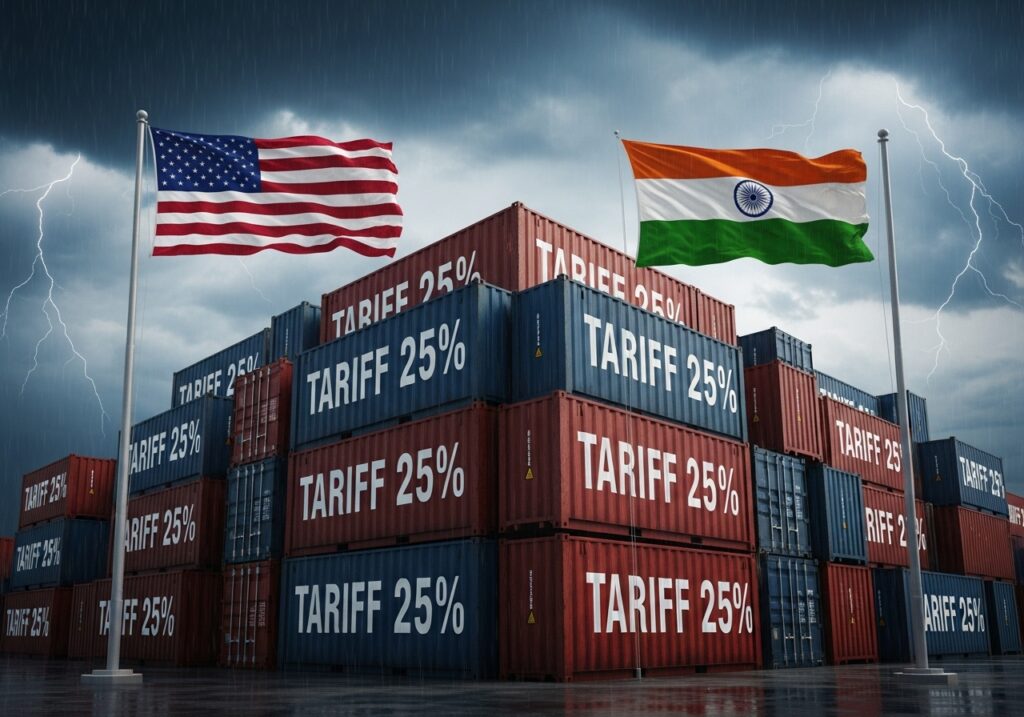
The United States has called off a key round of trade talks with India that were set to take place in New Delhi from August 25 to 29. This decision comes just days before new tariffs on Indian goods are set to begin, raising serious questions about where the U.S.-India relationship is headed and what this means for American national security and the global balance of power.
President Trump recently signed an executive order that adds a 25% tariff on Indian imports, effective August 27. That means some Indian goods will now face total duties as high as 50% when entering the U.S. market. This is one of the highest tariff levels we’ve applied to any major trading partner in recent years. The move was made in response to India’s continued purchase of Russian oil, despite strong warnings from Washington.
India has been one of the largest buyers of Russian crude since the Ukraine war began. While many Western countries have limited or banned Russian energy, India has taken a different path. Experts say India not only buys this oil for its own use but also refines it and resells it globally. This helps keep money flowing into Moscow’s war machine and undermines the sanctions the U.S. and its allies have worked to enforce.
The Trump administration has made clear that it expects allies and partners to stand firm against Russia. That includes choosing energy sources that don’t fund aggression. India, with its population of over 1.4 billion, says it needs affordable energy to meet demand at home. But from Washington’s viewpoint, continuing to buy Russian oil at record levels puts India at odds with the free world’s efforts to isolate the Kremlin.
The canceled trade talks were part of a long-running effort to create a new bilateral trade agreement between the U.S. and India. Over $190 billion in goods and services were traded between the two countries in 2024. The U.S. ran a trade deficit of around $45 billion with India—meaning we buy far more from them than they buy from us. American officials have been pushing India to open its markets to U.S. agriculture and dairy products and to reduce their reliance on Russian energy.
Now, with the talks called off and tariffs set to rise, tensions are growing. India’s foreign ministry has called the new tariffs unfair and says they are being singled out, especially when other countries like China continue to import Russian oil without facing the same consequences. That has led some to question whether the U.S. is applying pressure evenly or playing favorites in the region.
China’s role in this situation cannot be ignored. India and China both buy Russian energy, but Beijing hasn’t faced the same penalties. That sends a dangerous message: that some countries can defy U.S. policy without consequences, while others are punished. This kind of inconsistency could weaken America’s credibility and influence in Asia at a time when we are competing with China for leadership in the region.
India is a vital partner in the Indo-Pacific. It shares our interest in keeping China’s ambitions in check and has taken part in military exercises with the U.S. and its allies. But trade and energy policy are now testing that partnership. If India drifts closer to Russia—economically or politically—it could hurt our long-term goals in the region.
From a national security perspective, the stakes are high. America needs strong, reliable allies to counter rising threats from authoritarian states. While it’s important to stand firm on sanctions and energy policy, we must also be careful not to push key partners away. The Trump administration is using tariffs as a tool to bring India back to the table on more favorable terms. Whether that strategy will work remains to be seen.
In the meantime, American businesses that rely on Indian imports—especially in sectors like textiles, pharmaceuticals, and jewelry—could see cost increases. And if India responds with its own trade measures, U.S. exporters could also face losses.
What happens next will depend on whether both sides can find common ground. But one thing is clear: global trade, national security, and America’s leadership are all tied together. We must not lose sight of the bigger picture.